A few weeks ago, a friend reached out to me. His father was showing signs of dementia. He knew I'd spent years studying neurological health — and he asked me, plainly: what would you do?
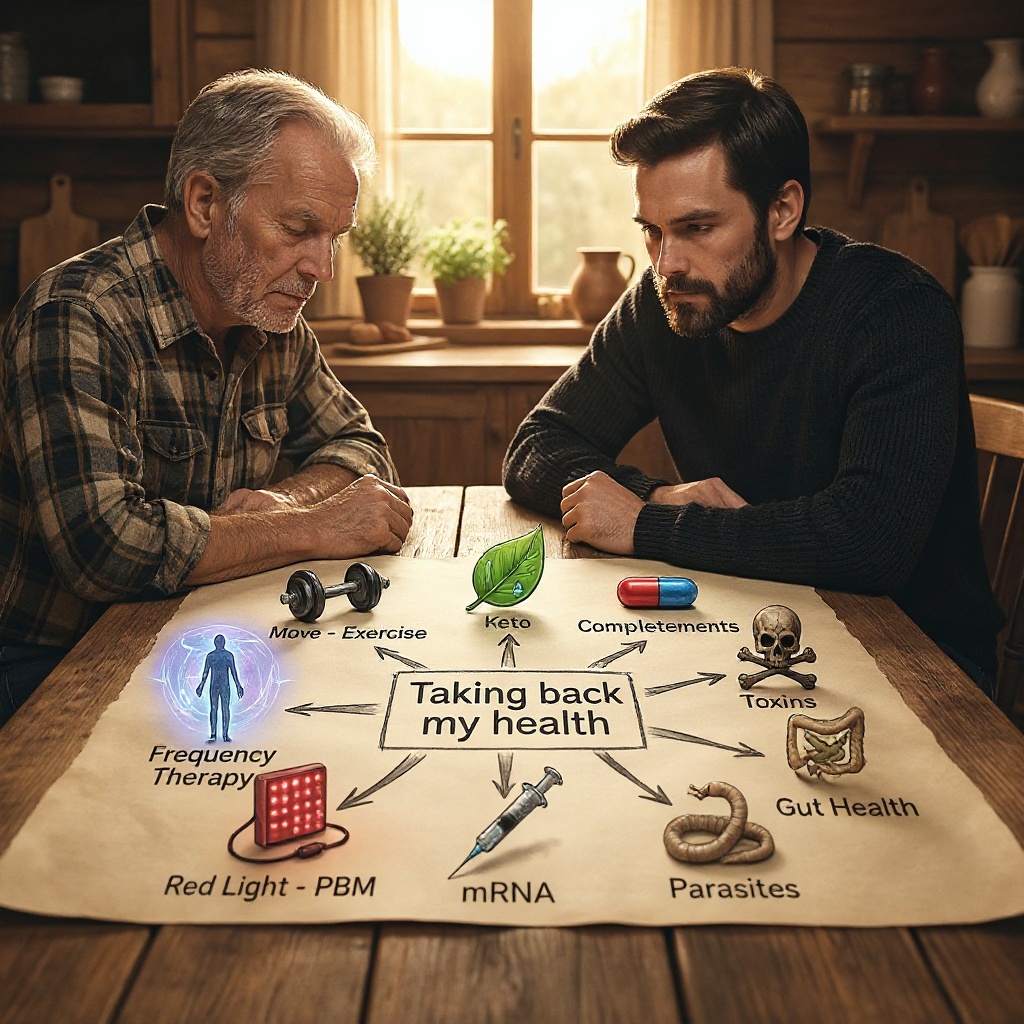
I wrote him a long email. It took me a while, because the honest answer isn't what the medical system typically offers — and it isn't simple. But it's based on more than two decades of reading, research, and lived experience. Here is a version of that email. No reference to my friend, of course. But the concepts belong to everyone who needs them. Here is the Mindmap:

My father was diagnosed with diabetes the year I was born. He died 25 years later, with cancer. My brother at 64. My sister at 62. That is not just family history. That is a pattern — and it put me on a path. As a retired pharmacist, I spent the next twenty years reading more than 50 books on nutrition, neurology, and metabolic health. This is what I found.

1. Cut the carbs — A ketogenic lifestyle (LCHF) is foundational
The most consistent finding across neurological conditions — Parkinson's, Alzheimer's, epilepsy, multiple sclerosis — is chronic inflammation. And the most powerful dietary tool for reducing whole-body inflammation is a ketogenic lifestyle, i.e. Low Carb, High Fat (LCHF).
This isn't fringe science. David Perlmutter's Grain Brain: The Surprising Truth about Wheat, Carbs, and Sugar--Your Brain's Silent Killers and William Davis's Weat Belly Series have spent years documenting the relationship between carbohydrates, blood sugar, and brain deterioration. The brain runs exceptionally well on ketones — arguably better than on glucose, particularly in a brain already compromised by inflammation. In one of his latest books, Drop Acid: The Surprising New Science of Uric Acid―The Key to Losing Weight, Controlling Blood Sugar, and Achieving Extraordinary Health, David Perlmutter points to the science behind the dangers of fructose, the sugar in fruits, and that of High fructose corn syrup (HFCS) (which we find in soda's, brown lemonade (cola's) and many other foods - a 500 billion subsidized industry that is at the roots of creating obesity, diabetes, and decline of brainfunction (dementia, Alzheimer's), as it causes a spike in uric Acid.
I wrote a book on the Ketogenic lifestyle after reading those 50+ books, and I've built a complete program around it at newketofatblaster.com. If you do nothing else from this list, cutting refined carbohydrates and fructose is where to start.

2. What's missing — completements, not supplements
Our food is no longer as nutrient-rich as it once was. Depleted soils, industrial farming, and heavy processing mean that most people are chronically deficient in minerals and vitamins the body needs to function — including the brain.
Carolyn Dean, author of Magnesium: The Missing Link to Total Health, coined a term I find exactly right: completements. Not supplements, because they don't add something extra — they complete the metabolic equation the body is already trying to run.
My own minimal list for neurological health specifically: vitamin D3, K2, A, E, magnesium, copper, zinc, lithium, selenium, and iodine (critical for hormone function, and almost universally ignored). This is a short, targeted list — there are many other nutrients worth taking, but these are the ones most directly relevant to brain health and dementia. I've written about most of them individually on this website — including one that surprises most people: nicotine as a neuroprotective agent. A full recommended completements list is at newketofatblaster.com/supplements.

3. We are being poisoned
This sounds dramatic. It isn't — or at least, it shouldn't be controversial for long.
Glyphosate (the herbicide in Roundup) is present in our food, water, and air. It disrupts gut bacteria, chelates essential minerals, and has been linked to neurological damage. Pharmaceutical side effects remain one of the leading causes of hospitalisation and death in the developed world. Fluoride in municipal water supplies continues to be added despite evidence of neurotoxic effects at sustained levels.
Less discussed: cheap plant oils — sunflower, canola, soybean — dominate processed food and push the omega-6/omega-3 ratio far out of balance. This drives the arachidonic acid cycle into chronic overactivation, suppresses the prostaglandin PG3 pathway, and feeds inflammation. Your brain pays the price over time.
The answer is not panic. It is awareness, and systematic reduction of the burden.
What you can actually do about it
The oil problem requires two moves, not one. First, remove sunflower, canola, and soybean oil from your kitchen — and read ingredient labels, because these oils are hidden in almost every processed product. Replacing them with butter, ghee, tallow, or coconut oil stops the active damage. But that alone does not correct the ratio. The second move is actively increasing your omega-3 intake: linseed oil (flaxseed) as a daily addition to food, and cod liver oil for its EPA and DHA — the forms the brain uses directly. Olive oil is worth using too, though it is primarily omega-9, a fat your body can produce itself; valuable as a replacement for omega-6 sources, but not a substitute for the omega-3 correction. Together these two moves begin to rebalance the arachidonic acid cycle and restore the prostaglandin PG3 pathway that chronic omega-6 overload suppresses.
The water situation deserves more attention than it usually gets. Standard household filters handle chlorine reasonably well. Most do not remove fluoride, dissolved pharmaceutical residues, or glyphosate traces. A quality water enhancement system — a Wasserveredler — addresses this more completely. Beyond filtration, hydrogen-enriched water delivers molecular hydrogen directly: a selective antioxidant that crosses the blood-brain barrier and acts on the oxidative load that sustained neurotoxic exposure creates. The research base on molecular hydrogen in neurological conditions is growing. I have reviewed the available systems and written about them at chakrafrequenzwasser.de. If you are serious about reducing the toxic burden on your brain, the water you drink every day is the most direct place to start.
Pharmaceutical burden is the most sensitive to address — and the most important to approach carefully. I am not suggesting anyone discontinue prescribed medication without medical supervision. What I do suggest is that the question "do I still need this, and at this dose?" is worth raising with your prescriber regularly. Polypharmacy — multiple medications interacting — is far more common than most patients realise, and the cumulative neurological effects are not trivial.
The broader principle is this: you cannot eliminate your toxic load completely. You can reduce it systematically, starting with the largest and most tractable sources. Diet, water, and deliberate awareness of what enters your body daily are the three levers most people actually have control over.

4. The gut biome
The gut and the brain are in constant two-way communication. Neurological precursors — serotonin, GABA, dopamine — are substantially produced by gut bacteria. When the gut is in dysbiosis (imbalanced), the brain receives fewer of the building blocks it needs to function and regulate mood.
Dysbiosis is driven by antibiotic use, caesarean births (no passage through the birth canal microbiome), processed food, and chronic stress. In the context of dementia, restoring gut health is not an add-on — it is foundational to any serious recovery or prevention program.
My go-to author is William Davis. His book Super Gut: A Four-Week Plan to Reprogram Your Microbiome, Restore Health, and Lose Weight, which I read in 2022, is another milestone in addressing dysbiosis. He describes how you can make yoghurt with special probiotic bacteria to balance your gut. I have been making over 150 litres of yoghurt since — and my gut is in great shape. If you want to know more, I've written a short manual with recommendations as to the yoghurt machine to use. Sign up for the newsletter on this page and write me at richard@newketofatblaster.com.

5. Parasites
Most people in the Western world have been conditioned to think parasites are a problem for developing countries. They are not. Parasites are ubiquitous — in food, water, soil, and in our bodies — and their role in neurological disease is increasingly documented. I have written about the connection between parasites and multiple sclerosis on this website.
I am a member of the Kalcker Hub — a global community of approximately 4,000 people and physicians working with chlorine dioxide solution (CDS) protocols. The doctors associated with this network are clear: a parasite cleanse, conducted properly, two to three times per year, is part of restoring the body's terrain. My wife and I have done it ourselves. The protocols are documented at andreaskalcker.com.

6. The pandemic — what I knew from day one
As a pharmacist with direct experience in the pharmaceutical industry, I knew something early on that later became a mainstream debate: you cannot safely bring a novel product to market in 6 to 8 months. The regulatory processes that exist — Phase I, II, III trials, post-market surveillance, long-term safety data — exist for good reason, and they do not compress to that timescale without corners being cut.
That is not a conspiracy position. That is decades of industry experience.
I have been sceptical of the mRNA interventions since they were first announced. The long-term consequences are still unfolding and being studied. My position to any friend is this: if your loved one received multiple mRNA injections, include it as a variable in the picture you are building — not as a verdict, but as something to be aware of as the science develops.

7. Red light therapy
One of the most underused, evidence-backed tools for brain health. Ari Whitten's The Ultimate Guide to Red Light Therapy is the reference I recommend. The clinical term is photobiomodulation (PBM) — using red and near-infrared (NIR) light to drive cellular energy production and reduce inflammation at the mitochondrial level.
The clinical data is compelling. A 2023 systematic review of 35 studies found that 83% reported improvements in cognitive function after PBM treatments — including all nine studies on participants with dementia or mild cognitive impairment. In one study, a single session of 810nm NIR light across the forehead produced a 25% increase in cognitive function within one hour in adults with mild cognitive impairment.
Brain-specific devices are listed on Ari Whitten's resource page at redlightdeviceguide.com.

8. Frequency therapy
My wife and I have been using the Vitalfeld from Vitatec for years — a bioresonance device rooted in the work of Raymond Rife. A 10-minute scan identifies what the body is dealing with (viruses, bacteria, parasites, energetic disturbances). The therapy process proposes and applies counter-frequencies. We also have a simpler home device for regular use.
This sits outside conventional medicine and I make no universal claims for it. What I can say is that we experience it as a useful tool, and it belongs in a comprehensive picture of health restoration for anyone willing to explore beyond the standard protocol. In Switzerland we highly recommend Irène von Allmen [Link]

9. Move — and make it non-negotiable
Sarcopenia — the progressive, age-related loss of muscle mass — is one of the most underestimated threats to health and longevity. Peter Attia's Outlive: The Science and Art of Longevity, which I read in 2023, is the reference. I know this personally: after five weeks in hospital following a serious burn injury requiring three skin transplants, I lost 10 kilograms of muscle. I know from experience how quickly it disappears — and how much effort rebuilding takes.
I'd argue this concept should be second on this list, not last — that's how important it is.
For brain health specifically, Attia documents compelling evidence that endurance exercise improves mitochondrial efficiency, lowers cortisol, and produces neurotrophic factors that directly support the brain regions responsible for cognition and memory. Strength training is equally important: a study of nearly half a million UK patients found grip strength strongly and inversely associated with the incidence of dementia.
Third on his list: stability. He writes: "Stability is often conflated with 'core,' but there is much more to it than having strong abdominal muscles. In my view, stability is essential to any kind of movement, particularly if our goal is to be able to keep doing that movement for years or decades. It is the foundation on which our twin pillars of cardiovascular fitness and strength must rest."
Read the book — and visit his website: peterattiamd.com/outlive/videos.
Because you don't need to become an athlete. You need to move, consistently, for the rest of your life.

One more: Dale Bredesen and the Re:CODE Protocol
For dementia specifically, the author I return to most is Dale Bredesen — The End of Alzheimer's: The First Program to Prevent and Reverse Cognitive Decline [Link] and The End of Alzheimer's Program: The First Protocol to Enhance Cognition and Reverse Decline at Any Age[Link]. His approach is systematic: comprehensive testing, identification of the Alzheimer's subtype, and a personalised protocol of dietary, lifestyle, and supplement interventions.
His clinical results — from a study of 25 patients, then 75 — have shown genuine memory restoration. The reason your neurologist hasn't mentioned this is not because it doesn't work. It is because regulatory frameworks do not permit trials using multiple dietary and supplemental components simultaneously. Bredesen had to fund his own studies.
Re:CODE Protocol and Re:CODE coaches
He has since built the Apollo Health organisation [Link], which trains doctors and coaches in the Re:CODE protocol. For anyone in the UK, I would point you to thecognitivehealthcoach.co.uk — a trained Re:CODE coach who can guide you through the process: tests, review by a Re:CODE-certified physician, and ongoing coaching.
A larger randomised controlled trial, with even stronger results, has just completed and is currently out for peer review. The science is moving — even if the mainstream hasn't caught up yet.
The honest reality
Knowing all of this is one thing. Making it happen is another.
The medical establishment will likely push back — or simply not engage. Family members may disagree. The person themselves may resist. Changing diet, taking a dozen completements, doing red light therapy, and exercising regularly is a significant ask for anyone — let alone someone with cognitive decline.
And there is the wider system to navigate: care homes have their protocols. Doctors have their prescribing preferences. Ethics committees have their frameworks. I have sat in meetings with oncologists and experienced first-hand how quickly alternative approaches are dismissed — even when the arguments are sound.
The most important ingredient in any successful intervention is a caregiver who is fully on board — informed, patient, and committed to a systematic approach over time.
The best time to start was years ago. The second best time is now.
Richard de Laat
There is more that can be done
This is the "Miller" 7±2 list — there is however more that can be done. Search for dementia on this website for additional articles. Sign up for the newsletter and you will be up to date with new content as I create it.
If you are looking for a structured programme built around ketogenic nutrition, targeted completements, and consistent movement, I've developed one at NewKetoFatBlaster.com.
Disclaimer: This article represents my personal research and professional opinion as a retired pharmacist. It is not medical advice. Always conduct your own research and consult a qualified healthcare practitioner before making changes to medication, diet, or supplementation. Full disclaimer.